

Today, we are going to be looking at Hepatitis B and the Cost of Treating Hepatitis B in Nigeria.
What is Hepatitis B?
Hepatitis B is a disease that we generally tend to underestimate its effects and potential lethality; it is a disease that we should not take lightly as it is dangerous. Hepatitis is a disease caused by a virus that affects the liver and if left uncontrolled could harm the liver greatly. It is of three types namely: Hepatitis A, Hepatitis B, and Hepatitis C.
The interesting fact is that there is no definite cure for the hepatitis B virus. It usually goes away by itself in about 4- 8 weeks. Official reports show that More than 9 out of 10 adults who get hepatitis B recover from it with no extra treatment.

However, though, about 1 in 20 people who get hepatitis B as adults become “carriers” of the virus meaning they have a long-lasting hepatitis B infection that they will carry for the rest of their lives. These Carriers possess the capability to pass hepatitis B to other uninfected people. Almost all carriers are contagious and if you are a carrier or live near one, caution is advised because they can spread the hepatitis B virus for the rest of their lives.
These chronic Hepatitis B infections may lead to very serious liver diseases like cirrhosis and cancer of the liver. One in 5 people that possess the chronic strain of the hepatitis B die from it. However, do not panic yet, there are drugs that have been developed to help treat and mitigate the effects of the chronic strain of the hepatitis B virus.
On a general note, babies that happen get hepatitis B during birth will develop the chronic strain, unless the baby is treated right immediately. Please note that these treatments are most effective if they are given to the baby quickly. This is one of the many reasons why antenatal care recommended for pregnant women because in antenatal care, the women are tested for Hepatitis B infection.
Nigeria has a population of over 200 million people and has a Hepatitis B prevalence of 10.1% based on a recent report by the Nigeria HIV/AIDS Indicator and Impact Survey (NAIIS). The NAIIS had a National household-based Survey that assessed the prevalence of HIV and related health indicators including the national prevalence of an additional blood-borne virus: the Hepatitis B virus. As a consequence of this report, it gives us an estimated number of about 20 million Nigerians living with the Hepatitis B virus.

Cost of hepatitis B management in Nigeria
The cost of Hepatitis B in Nigeria, categorized by the national economic burden and the specific cost of medication for patients:
1. National Economic Burden (Annual Cost)
According to Dr. Godwin Ntadom, Director of the Public Health Department at the Federal Ministry of Health (FMOH) and report from the World Health Organization (WHO) on July 2025:
The Real Cost of Treating Hepatitis B in Nigeria
To understand how heavy the financial burden of Hepatitis B is, we have broken down the costs into three clear categories based on recent research. It’s not just about buying medicine; it involves hospital bills, transport, and even the money you lose when you cannot work.
1. The Hospital Bills (Direct Medical Costs)
Estimated Cost: ₦1,413,090 (approx. $933) per year
These are the fees you pay directly to the hospital or pharmacy to keep the virus under control. This amount covers:
-
Registration & Consultation: Paying for your hospital card and seeing the doctor.
-
Medications: Buying antiviral drugs and supplements to protect the liver.
-
Essential Tests: Paying for expensive but necessary investigations like the Viral Load test (HBV DNA) to count the virus, liver function tests, and abdominal scans.
2. The “Hidden” Expenses (Direct Non-Medical Costs)
Estimated Cost: ₦202,215 (approx. $133) per year
Treatment doesn’t happen in a vacuum. These are the out-of-pocket expenses that people often forget to calculate but still take money from your pocket. They include:
-
Transport: The cost of transport fare or fuel to get to and from the clinic for every appointment.
-
Feeding: Buying food while waiting at the hospital.
-
Caregiver Costs: The money spent by family members who have to travel with you or stay with you during treatment.
3. Money Lost Due to Illness (Indirect Costs)
Estimated Cost: ₦640,095 (approx. $421) per year
This is the “opportunity cost” of the disease—money you would have made if you were healthy.
-
If you are a salary earner, this is the income lost from missing work due to fatigue or hospital admission.
-
If you are a business owner or trader, this is the profit you miss out on because you couldn’t open your shop or go to the market due to sickness.
The Grand Total
Total Estimated Cost: ₦2,255,400 (approx. $1,487) per year.
When you add it all up, managing Hepatitis B costs over 2 million Naira every year. For the average Nigerian family, this amount is a massive financial burden. Sadly, this high cost is enough to push many families into poverty as they struggle to save the life of a loved one.
Patient Cost for Hepatitis B Treatment in Enugu Nigeria (Immunoglobulin)
According to the study published in BMC Pregnancy and Childbirth (2025) regarding Hepatitis B Immunoglobulin (HBIG) in Enugu Nigeria—a critical medication to prevent mother-to-child transmission:
-
Cost per Dose: The market value for Hepatitis B Immunoglobulin was found to range between ₦56,000 and ₦85,000 per dose.
-
Willingness to Pay: The study noted that this price is “prohibitive” for many, as the average amount pregnant women were willing/able to pay was only about ₦23,178.
Important Context on Patient Costs: The patient-level pricing data in the second study reflects an exchange rate of approximately ₦370 to $1 USD (data collected around 2019). Given recent inflation and currency devaluation in Nigeria, the current market price in Naira (₦1459 to $1 USD today) for these imported medications is likely significantly higher today than the figures cited in the study.
Estimated Costs of Hepatitis B Tests in Nigeria (2026)
| Test Name | Government Labs (e.g., NIMR) | Private Labs (Lagos) | Private Labs (Abuja) | Frequency (Typical) |
| HBsAg Screening (Rapid) | ₦3,000 – ₦8,500 | ₦5,000 – ₦10,000 | ₦5,500 – ₦12,000 | Once (for diagnosis) |
| HBV DNA (Viral Load) | ₦35,000 – ₦50,000 | ₦37,500 – ₦75,000 | ₦35,000 – ₦70,000 | Every 6–12 months |
| Liver Function Test (LFT) | ₦4,000 – ₦10,000 | ₦14,500 – ₦25,000 | ₦15,000 – ₦27,000 | Every 6 months |
| Abdominal Ultrasound Scan | ₦4,000 – ₦12,000 | ₦10,000 – ₦20,000 | ₦12,000 – ₦25,000 | Every 6–12 months |
| Hepatitis B Panel (5-in-1) | ₦15,000 – ₦25,000 | ₦17,000 – ₦35,000 | ₦20,000 – ₦40,000 | Once (for baseline) |
| Alpha-Fetoprotein (AFP) | ₦10,000 – ₦15,000 | ₦15,000 – ₦25,000 | ₦18,000 – ₦30,000 | Cancer screening |
Diagnosis of Hepatitis B in Nigeria
To figure out if you have Hepatitis B, the doctor needs to examine you and look for telltale signs of liver damage, such as yellowed skin or belly pain. Some common tests used to detect the Hepatitis B virus include:
- A Blood test. A Blood test is used to detect signs of the hepatitis B virus in your body and it also serves the function of telling your doctor if it’s acute or chronic. A blood test also determines if you are immune to Hepatitis B.
- A Liver ultrasound. A process called transient elastography is used to the amount of liver damage.
- Liver biopsies. In a liver biopsy, the doctor removes a small sample of your liver to test for liver damage. In the test, a doctor inserts a thin needle through your skin to your liver and removes a tissue sample that he send s the lab to test for liver damage.
Prevention of Further Infection Hepatitis
- Have Safe Sex. If you happen to be sexually active, please inform your partner of your condition and make sure he understands it and talk about the risk of transmitting it to him or her during intercourse. Use a new condom every time you have intercourse, but note that condoms only reduce risk but do not eliminate such said risks.
- Get Your Partner Tested. Anyone that you have had sex with needs to be tested for the Hepatitis B virus. Your partner needs to know their infective status so that they don’t infect others with the virus.
- Do not share personal items. Never share any personal care item that you use if you use including needles and syringes. Also never, share razor blades or toothbrushes, as they may carry traces of infected blood.
Treatment of Hepatitis B in Nigeria
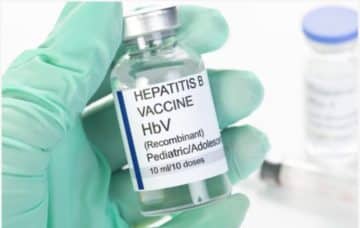
More often than not, people diagnosed with a chronic strain of the hepatitis B infection are in need of treatment for the rest of their lives as the virus thrives in them until death. The Treatment helps reduce the risk of liver disease and serves to prevent you from passing the disease to any other person. The most common treatment for the chronic strain of the Hepatitis B Virus:
- Antiviral medications. Antiviral medications including entecavir (Baraclude), tenofovir (Viread), lamivudine (Epivir), adefovir (Hesperia) and telbivudine (Tyzeka) are given to help fight the virus and slow its ability to damage your liver to as lethal extent. You should have a talk with your doctor about which medication is best for you.
- Interferon injections. Interferon alfa-2b (Intron A). This is a synthetic version of a substance produced by the body’s immune system. It is used as a treatment for young people with the chronic strain of the hepatitis B virus who wish to avoid long-term treatment of the disease or for women who might want to get pregnant within a space of a few years, after completing a finite course of therapy. Please note that Interferon should never be used during pregnancy. Some known side effects of the drug include nausea, vomiting, difficulty in breathing and depression.
- A Liver transplant. If unfortunately, your liver has been severely damaged by the virus then a liver transplant might be an option. In a liver transplant, the surgeon removes your damaged liver and replaces it with a healthy liver.
Thank you for reading this post. Don’t forget to subscribe to our YouTube site here for Health and dental care content. Furthermore, follow us on Facebook, X.com (Twitter), Pinterest, Telegram, TikTok, LinkedIn, and WhatsApp Channel.